Feeds:
Posts
Comments

Archive for October, 2023

A couple of years prior to Covid, my friend Kenny Crummett passed away in a car wreck. He had had some strokes, and he may have had a heart attack causing the wreck. I was honored to hunt with him a couple of years locally. Ken was from West Virginia, but we had a local mutual friend.

Ken was always sending me various things including turkey calls. The call shown here he affectionally called The Buzzard Call. The title brought about laughs and jokes, but to be honest the call has a good tone.

I had given the call to my stepfather to hunt with not knowing his hunts would be about over due to cancer. Bob succumbed to the disease in April. Recently I rediscovered this call.

Kenny Crummett’s Buzzard Call.

I talked with our mutual friend and was told to visit his property and hunt fall turkeys. I gladly accepted. I arrived in the dark hours prior to dawn and began a walk towards my destination. About fifteen minutes before legal shooting time, I noticed a dark mass below in a tree. I soon saw a couple of others dark forms. I was seeing turkeys! I made a move and walked directly below them.

I had a dilemma for my friend has tame turkeys and I began to wonder if these birds could be his. I was over two hundred yards from his home. I called him and he told me his birds roost at the house and the birds I was seeing were wild turkeys.

The time was moving along, and the birds were very visible. I heard one drop down and I decided now was the time to attempt to break them up. At least, six turkeys exploded from the trees. The break didn’t look too good.
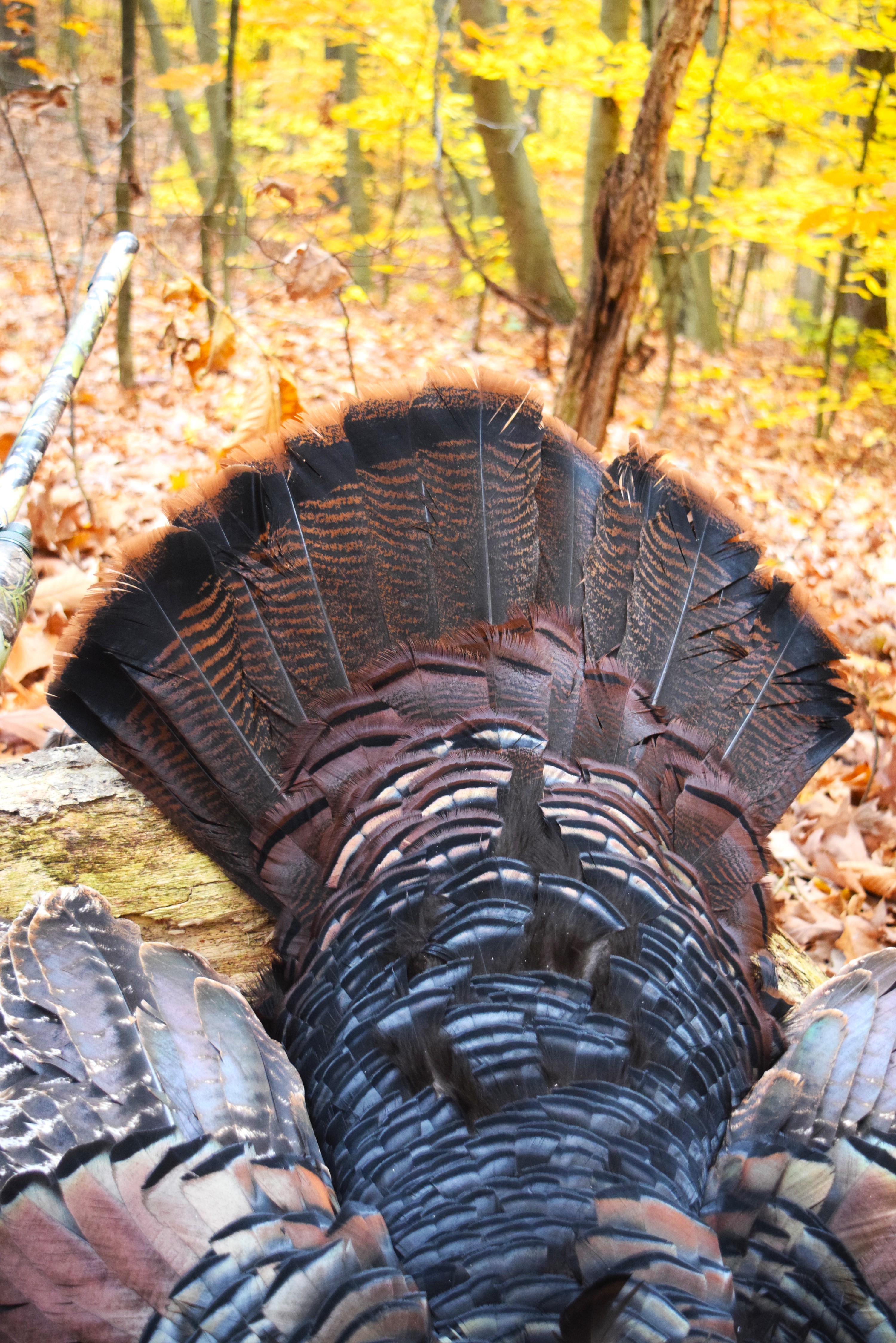
I moved away towards the direction they all went. I walked a right-of-way and settled in to call. It wasn’t very long I heard yelps below my position. Once I determined exactly where the bird was, I readjusted my position. The Buzzard Call was working, however, I switched to my natural voice once the bird was well committed to coming in.

The shot was a twenty-two-yard shot and I had my gobbler. The beard was five inches and the spurs were five/ eighth inches long.
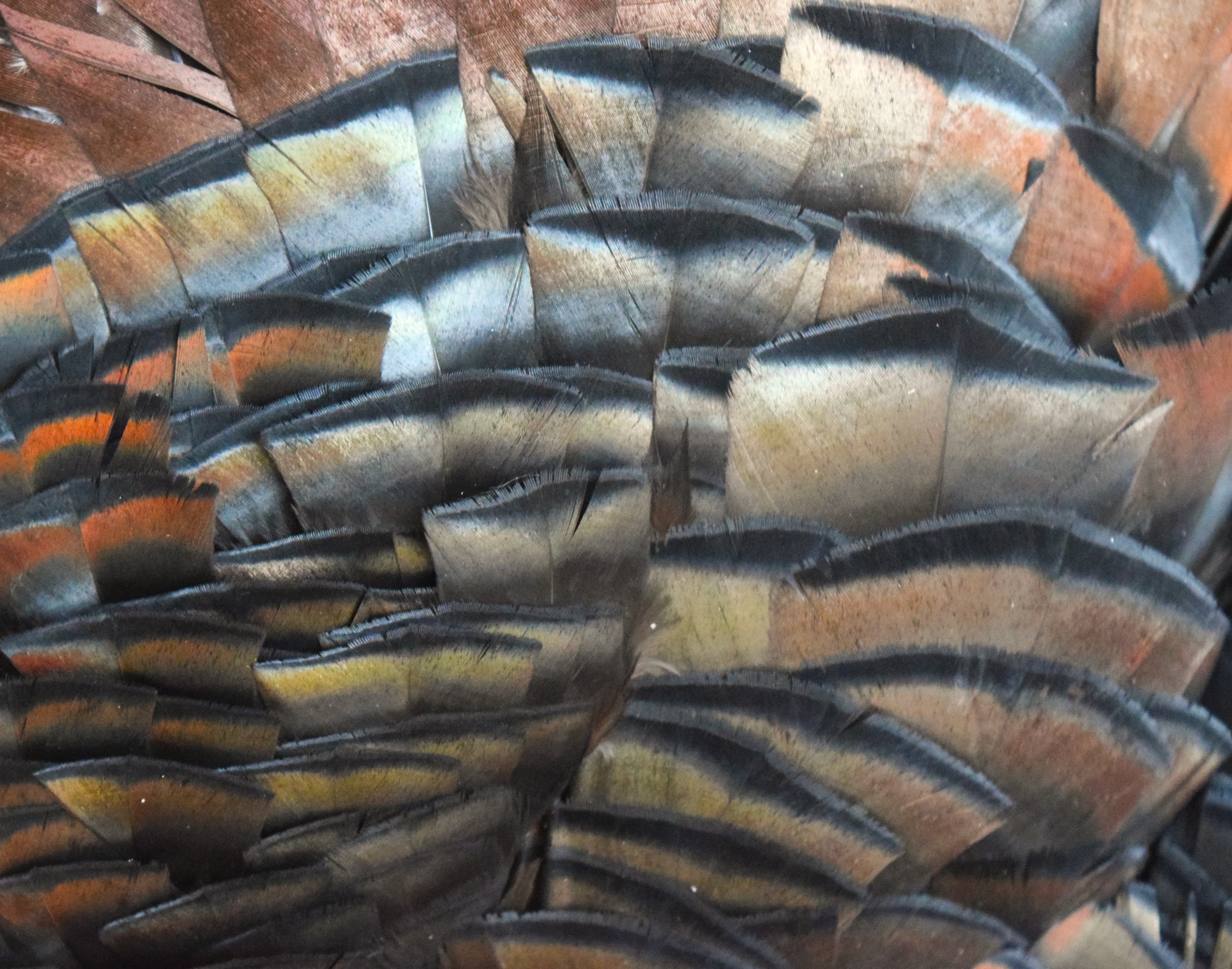
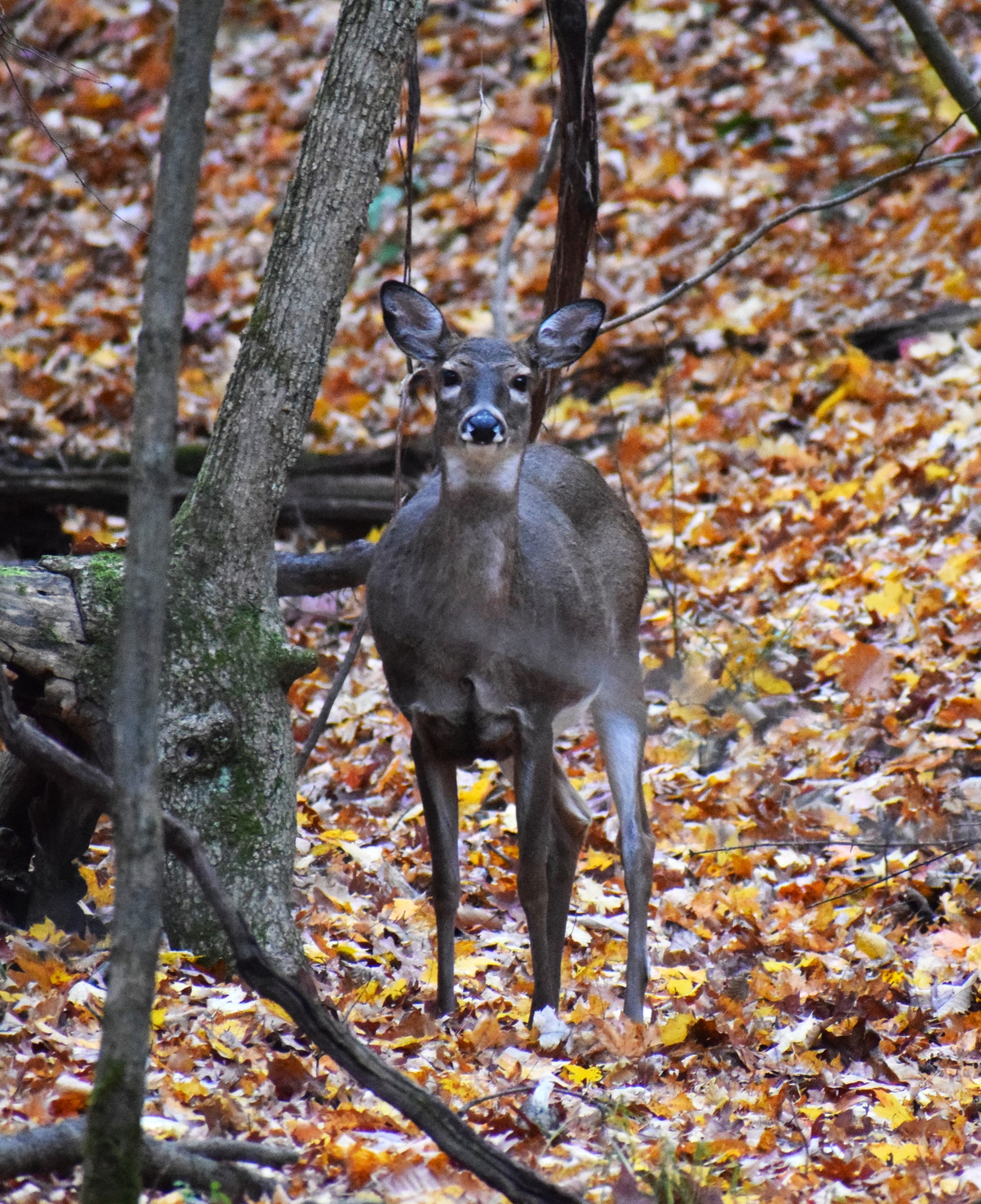
I spotted this doe bedded down but she stood up just as I was about to snap the photo.

Read Full Post »

I hunted with an inline muzzleloader for two days for Black Bear only. I failed to see any. I hunted the third day for bear and deer. I failed to shoot; however, I did have the crosshairs on one doe and had difficulty deciding to shoot or not. I elected to not shoot for the deer was in high grasses and I wasn’t totally sure of the size.

Black Bear track

Chestnut

Read Full Post »

king

October 24, and I headed off to Cowanshannock Creek to fish and take some photos of this beautiful waterway. This area of the stream, although beautiful, can be treacherous for the water is fast and deep in many places. To add to the potential of falling, the shorelines of the creek are covered with rocks of various sizes and moss. Older legs need to be extremely careful. I remembered while moving along how there was a time, I would welcome the challenge even jumping from one rock to another. Older wisdom prevented such actions today.

A beautiful Brown trout.

One bank along the stream became steep and rocky with thick vegetation. I needed to cross to avoid the steepness and struggled finding an area I felt secure with crossing. A large log offered a chance, but I would need to straddle and work across on my butt. This log was wet and bark less and standing or walking across it would NOT HAVE WORKED!

I spent the morning in the area until the temperatures began climbing too much for how I was dressed.

Some past Beaver gnawing on this tree.

Read Full Post »

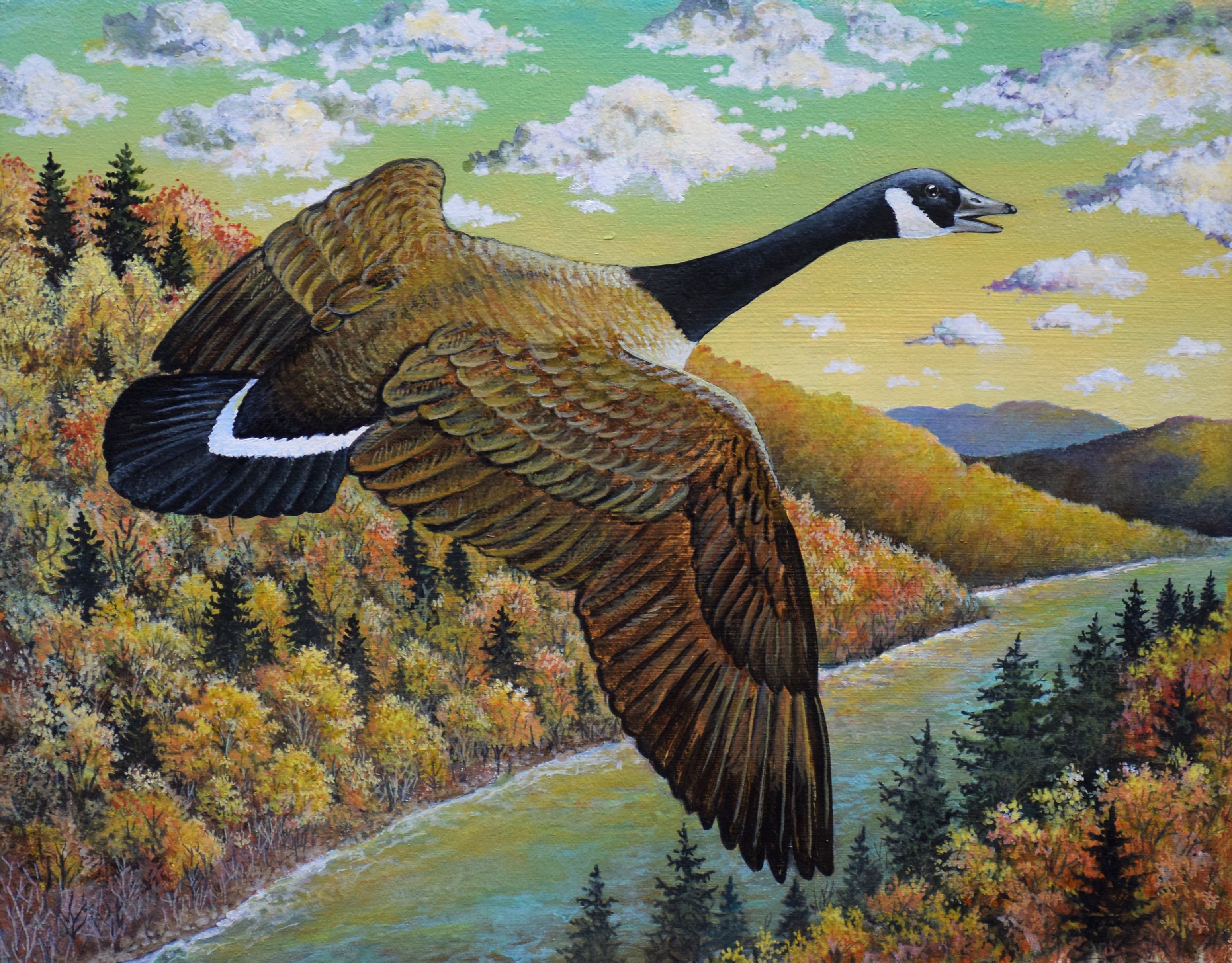
High Over The Allegheny

High Over The Allegheny

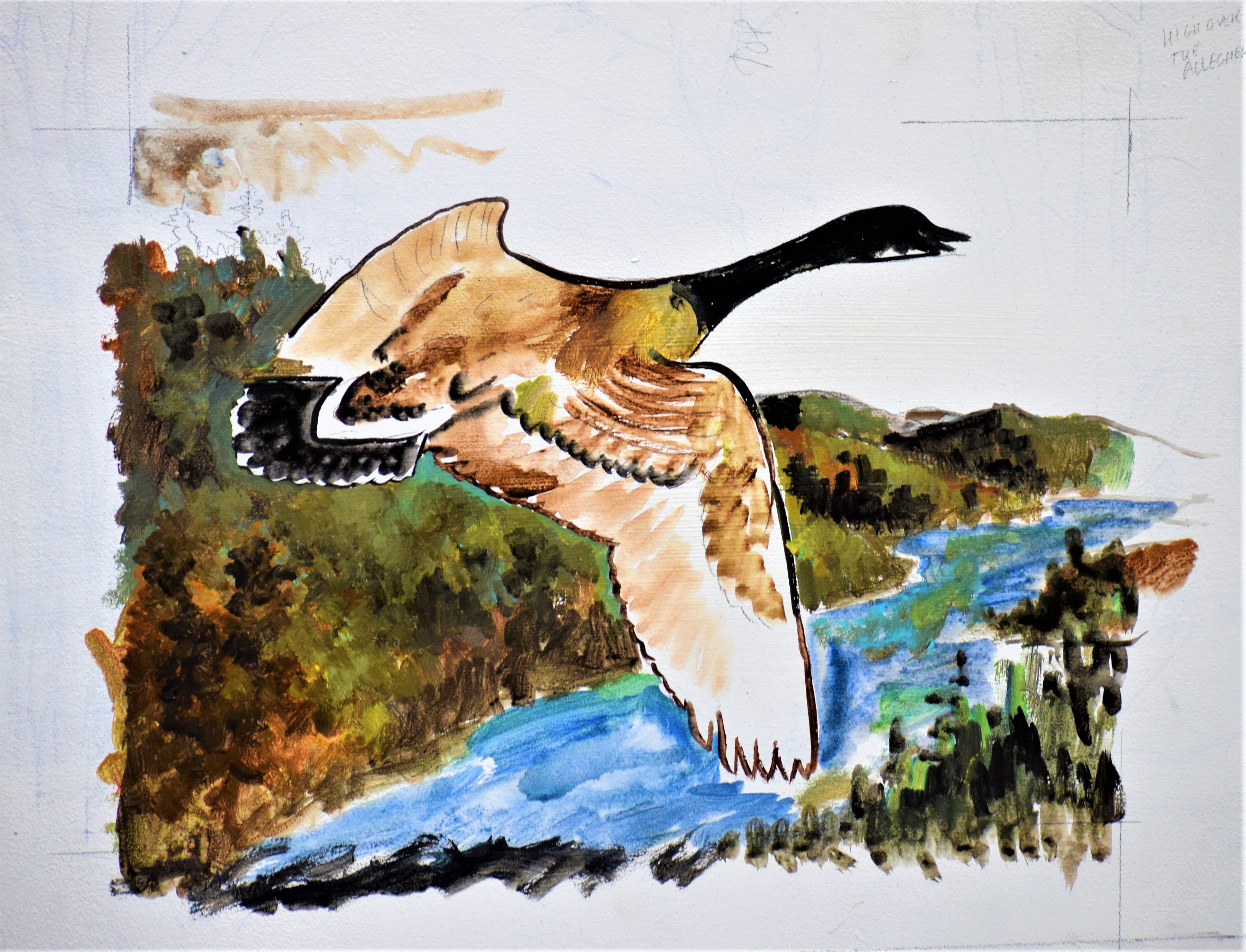
Sometimes I get on a roll with my art. I had decided to enter the Pennsylvania Waterfowl Stamp selection event with a Hooded Merganser. (See post on the Hooded Merganser painting.) Upon completion of that painting, I elected to do another painting of a Canada Goose. The event allows the artist to submit two pieces for selection consideration. Once the idea was sketched, I quickly determined the title to be, “High Over the Allegheny.”

The above sketch was the beginning of this painting. I thought, at first, to do fog in the lower terrain of the landscape and over the river.

I liked the initial idea and sketch, and I would soon transfer this sketch onto a prepared, with gesso, Masonite panel of the proper size as per the rules.

The slapping on of the paint began. I used acrylic paints to do this art.

The “slapping on the paint” beginning.

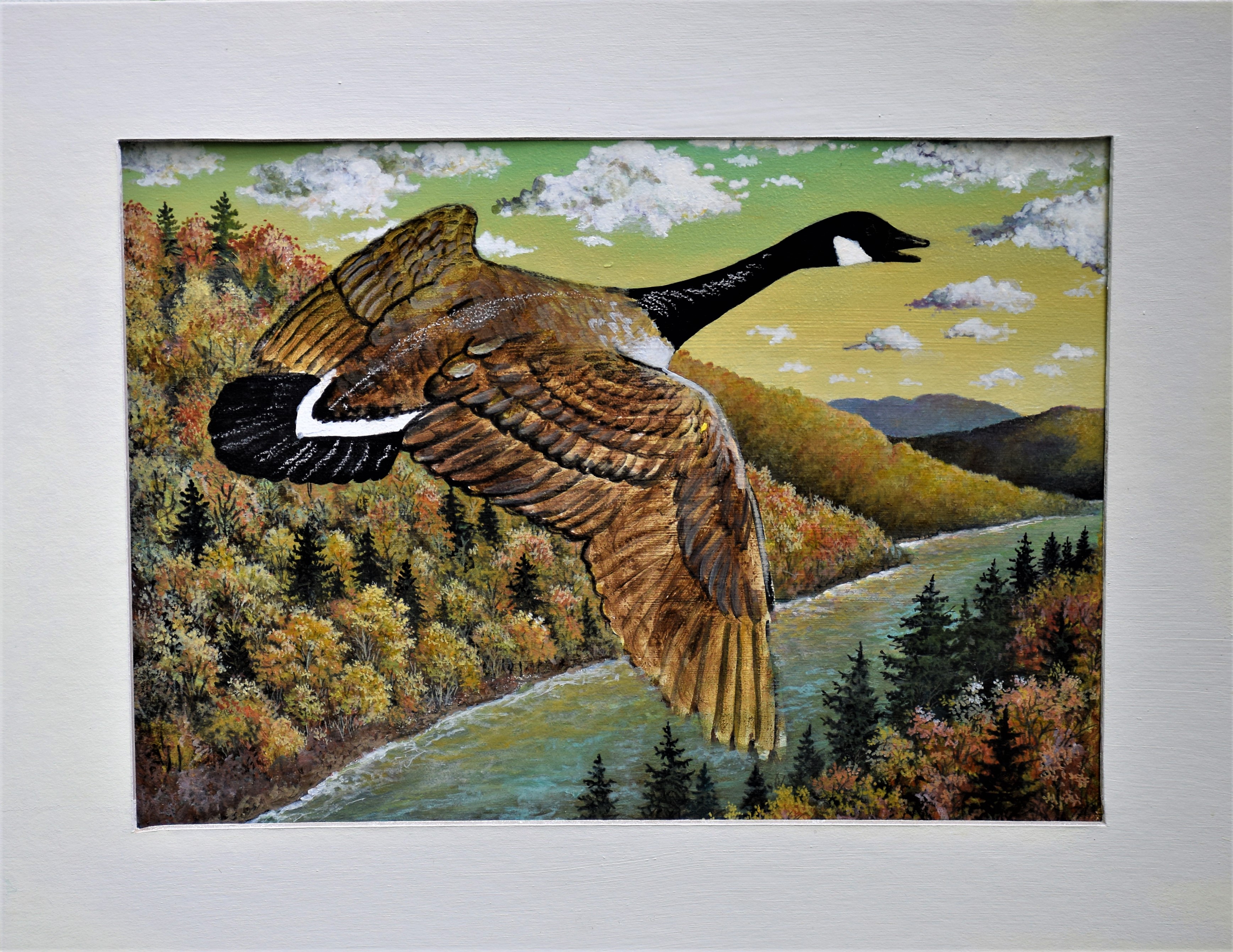
After about ten or twelve hours the painting is shaping up. Notice chalk lines on the piece to help me with direction and visualize contours and shapes.

The detail is being completed on the Canada Goose, but I still have some time before I can say, finished!

I finished this painting in 13 days. Like I said above I was on a roll with an inspiration to paint.

Read Full Post »

Fatherhood- My Monarch

Recently, I happened upon an interesting site at the house. I noticed a Monarch Butterfly chrysalis. I do not often see such an interesting, so I took a few photos and vowed to observe the chrysalis daily. I, jokingly, stated I was to be a father.

The Monarch Butterfly Chrysalis.

I would soon see the indistinct black lines of the future wings inside of this cocoon. A few days later, upon observing I noticed the adult Monarch Butterfly on a leaf drying in preparation for flight. Another day and the butterfly had moved on in flight.

The life cycle of this gorgeous butterfly is one on unbelief. The female lays eggs on a bottom of a leaf, often Milkweed for that is their food source. The number of eggs is between one hundred and three hundred eggs. They will hatch in about four days eating their egg cases.

This larva stage will grow over ten to fourteen days shedding their shells five times. Each of the five molts known as an instar. This caterpillar is ribbed with yellow, white and black stripes.

Once the growth cycle reaches peak the caterpillar will go into a pupa stage. The caterpillar is now in the chrysalis stage. (See photo.) Here the caterpillar will form into the adult butterfly. As stated, I would soon notice the black veins of the wings during this cycle.

The males have a dark spot on each hind wing on one of the darkened veins. The females lack these spots. The late forming Monarchs will migrate to Mexico and California depending on where their early life began. This butterfly would be heading for Mexico. The following February or March they will migrate back ready to rep.

Male Monarch Butterfly. Note the dark spots.

Read Full Post »