A couple of weeks ago I went to a place of memories for me. It is Reefer’s Cove, a tributary for Keystone Lake. The water was low due to the lack of rain and heat of this past summer. I arrived early with a fog and sub-freezing temperatures. I saw frost in various low areas.
The area has a special memory for me for I harvested my very first buck up a steep side hollow when I was a young fellow. The hillside was very steep, and I shot the deer along the bottom. MY dad and I struggled to climb the hill to the car.
Another memory I have is in very late May of 1999, I took my father here to fish. Several weeks later he would be gone. Life is like that, I guess.
As you can see, I managed a lot of deer photos. I think I saw fifteen deer this particular morning. I saw the top of a bear head behind the bank’s contoured slope.
Must have been a cemetery under water at one time.
I come onto a number of tombstone bases with a few broken head stones. I would like to know the history of this find.
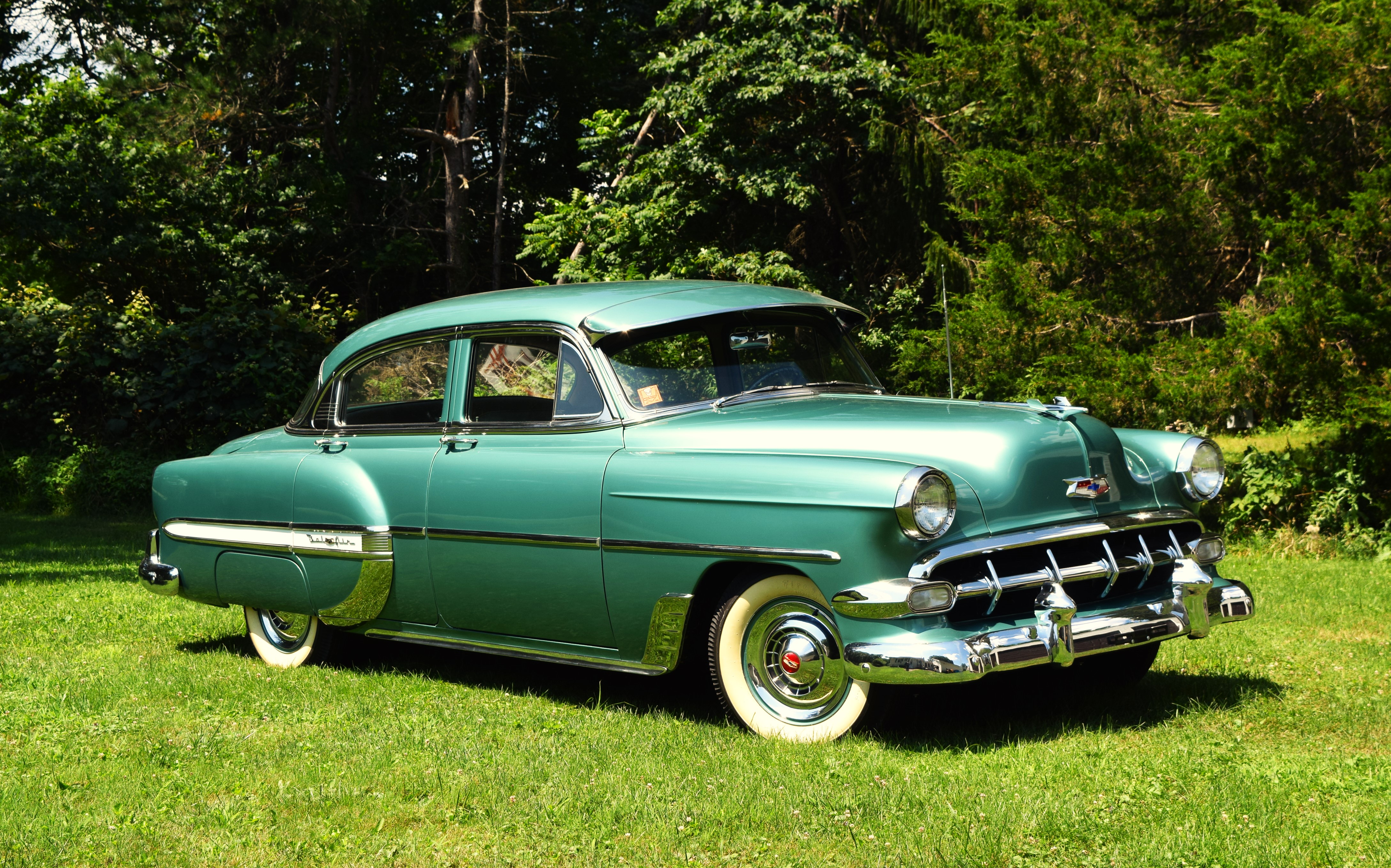
The 1954 Chevy Belaire is a real beauty. I had it at a car show last evening. I took my mother along. The car was originally purchased in 1954 at Plumville, Pennsylvania.
I have come to the realization that it has come a time when I wish to sell the car. I have no children or grandchildren to leave the car at a future date. Please contact me if interested. (hemlock404@windstream.net)
As one can see with the photos this is a gem of a car. It spent most of the years in a garage setting.
As a student in school, I didn’t truly understand the possibility of going to war. I believe I occasionally thought about but was naive to the fact that I could be sent to Vietnam after I graduated. The horror just didn’t sink in!
However, prior to my graduation the war was coming to an end for America and the draft had been stopped.
I just completed reading the book shown above about the Ia Drang conflict with the North Vietnamese. I quickly learned my knowledge of that war and especially this battle was far from being complete. The American forces were greatly outnumbered. The blood, death, carnage and the wounded were great. The bravery of the young men really impressed me. The battle details were unbelievable, and one can’t help wondering how anybody survived. Mel Gibson starred as Lt. General Harold (Hal) Moore in the movie titled, “WE WERE SOLDIERS.” I have seen the movie but look forward to seeing the film again now that I have some knowledge as to what had happened.
I have questions! What would I have been like in the war scene? Could I have been a brave American soldier? I want to think I would have been a brave young man and fought bravely. Lucky for me I will never know.
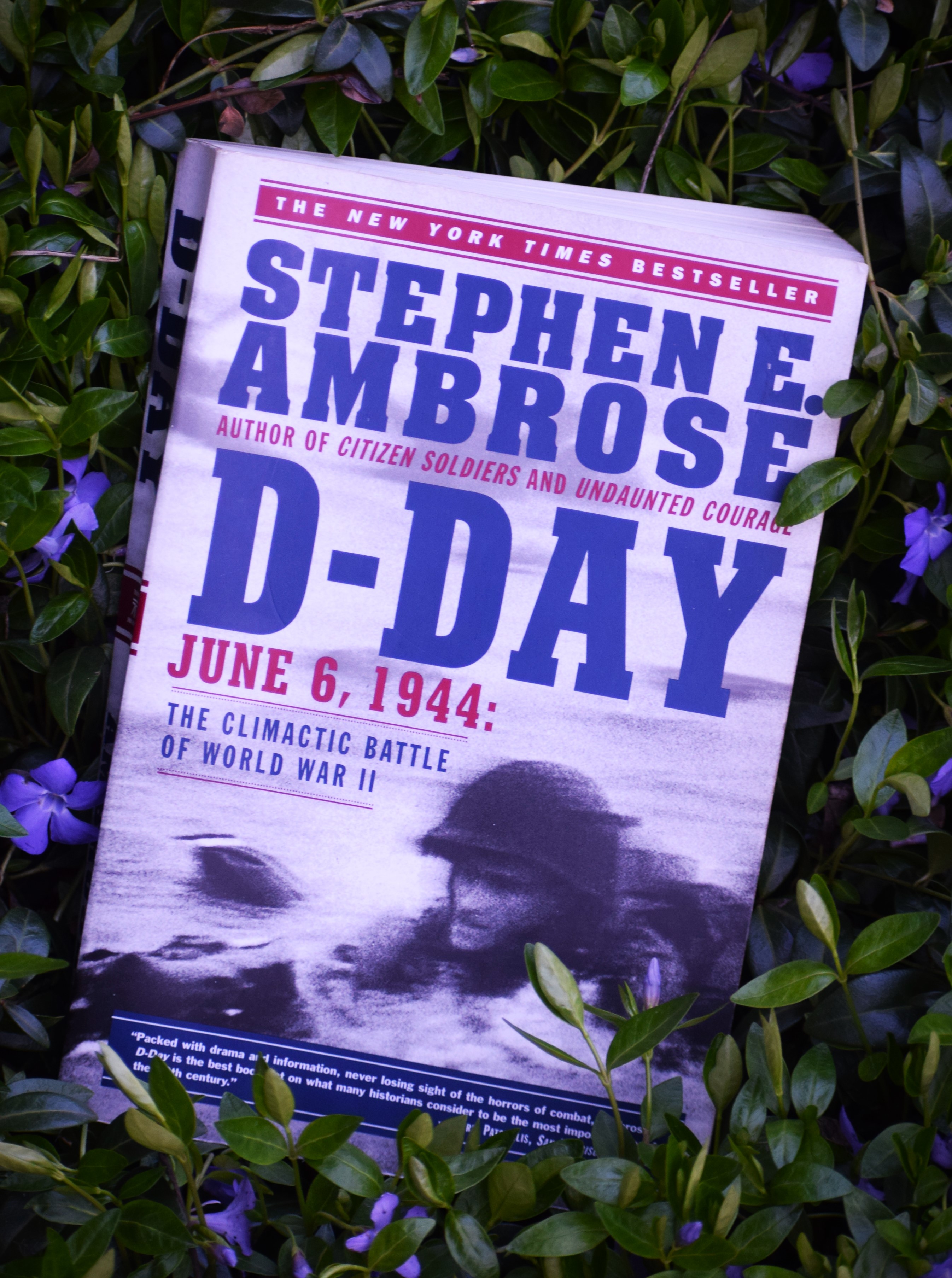
A recent read for me was the book entitled, “D-Day, June 6, 1944, The Climatic Battle of World war ll.”
The invasion was a necessary in the second World War, that could not be denied. The leaders of the allied forces planned and planned. The fighting forces to be in this future action against the German army were trained and trained. When the time came to launch the invasion on the beached of Normandy, France, the plans became a nightmare, especially on the beach known in this battle as Omaha. Failures were everywhere. The Germans were in place and the results were destruction, chaos, casualties galore and death.
In my feeble mind, I find imagining what these brave young men faced almost impossible. I would fight tears more than once as I visualized the events and circumstances I was reading about. Humankind should never be required to endure such events but yet mankind has been forced to face the face of evil continuously over the countless centuries.
Of course, I had to think of my father, Allen K. Smail. He was involved on D-Day 13 if my memory is correct. Would he had survived D-day? Such a question is a humbling experience.
As per the training, the book records a number of times where training would eventually come together and counterattack the German wrath once those who survived the beach reached the tops of the cliffs and such.
Thank you, to all those brave young men, sacrificing so much on that day and the days following the invasion. It is a debt that cannot be ever repaid from America.
I went to surgeon’s office to have my hand’s stitches removed this morning. Once home and realizing the day was to be nice a decision to walk. became reality. I thought for a moment before heading to where a small community once existed. That place was Kelly Station.
I hadn’t been in the area for quite some time. the Rails To trails people have been doing a great job preparing the trail for use. One site I hoped to see was an island where a Bald eagle nest exists. I spotted the eagle’s nest two years ago but from the other side of the river. Th e nest was harder to find initially but I eventually spotted it among the limns of a Sycamore tree. An adult Bald eagle was on the nest. I struggled to find a place where I might get a decent photo. Lots of limbs made any clarity difficult.
I continued hiking and estimated around seven miles where walked this day. I know the old knees were feeling some discomfort, but I pushed on.
I saw four deer this day. I saw a small flock of turkeys on a right-a-way. Along the river I would see a lot of Canada Geese, a pair of Hooded Mergansers and a pair of Wood Ducks. I watched a flock of circling Turkey Vultures a few times. I wouldn’t fall over. Tough on them…
I did see some Gray and Fox Squirrels, too.
Old Coke Ovens
I easily saw ancient remains of coke ovens at a couple of locations. These coke ovens were in use back in the elate 1800s. I should research these to obtain other information.
The Allegheny River South of Kelly Sation.
Off and on while hiking I spent some moments working my fingers on my hand. Doc says to work them to keep them from stiffening up and to avoid scar tissue buildup.
I spent about five hours or more while on this excursion.
Bob “Slim” Bowser and myself dressed in period attire.
Recently, I attended the Armstrong County Historical Museum in Kittanning, Pennsylvania. The event was for a group of junior and senior student to visit the museum to learn local history. My “job” was to talk about the French and Indian War period including the battle in Kit-Han-ne. (Kittanning)
I am dressed above in attire an eighteenth-century militiaman may have been wearing during that time. Slim, on the other hand was dressed in Civil War attire of the northern army of those days…the Union. Slim discussed local Civil War details of men from the Armstrong County lands. He is a living historian representing the 62nd Pennsylvania Volunteer Infantry. Many of these men came from our area.
Jim Johnson and Donna Weckerly, both local historians, talked on various other interests of history.
The students were very interested in our discussions.
I took a moment to stand beside my father’s World War Two uniform on display at this museum. My father, Allen K. Smail served in the European theater including the Battle of the Bulge in Belgium.
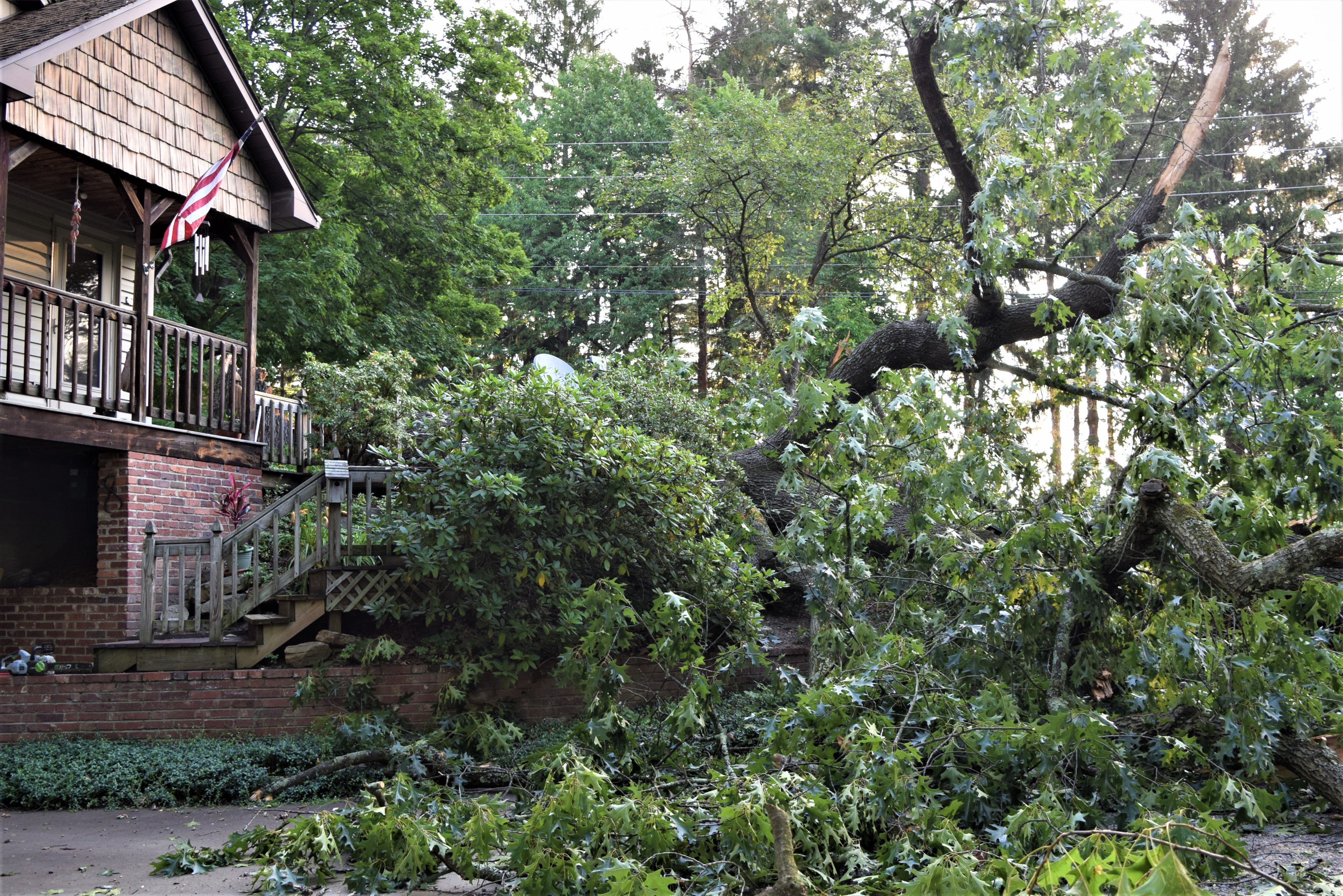
Laurie and I were arriving home on July 12 around five when I noticed something was amiss. The huge Black Oak tree living on the front yard was down! The driveway was completely covered with the tree, so I had to come in from the road onto the yard.
After the initial shock wore off I gathered my little chain saw and began to clear a way to get to teh garage. This was a big job, and I completed this task in the following morning with a charged battery for the saw.
We were extremely fortunate with no part of the tree hitting the house and deck. The satellite dish was missed, also. My rail fence across the drive had one post knocked off level but no breakage. I do have various damages that will need replaced, but the fact of nothing major sure is a great thought.
I called the insurance company and a couple of tree crews and settled on one outfit. It took three days for the oak to be removed and cleanup.
Interestingly, I counted the rings the best I could and came up with 158 to 160 growth rings. This tree’s growth began around 1863 or so at the time of the Civil War! Once the stump was cut close to ground level I measured the base at six feet- four inches.
I always liked the old tree and will miss the shade it provided. Acorns were forming on the limbs. The tree man said he could evidence of a disease around the roots. This was what caused the decay at base level. The rest of the tree was sound solid wood.
My interest in German history was initiated through the words of my father, Allen K. Smail. My father, a World War 2, veteran talked of such things occasionally. We watched the old series, Hogan’s Heroes with laughter. One thing I remember was the mindset of the SS soldiers as he told me. My father who was part of the military police. (MP) would have the occasion to watch over German prisoners. He spoke of the differences between the regular German soldier and the SS soldier.
The German word, Schutzstaffel was abbreviated to the SS. Such men were originally formed to be only dedicated to the armed protection of Adolf Hitler and the NAZI party ideals. One truth I learned from the reading of the above book; The Waffen-SS is one of around twenty separate SS divisions. The Waffen-SS was the combat unit.
Of course, some of the SS units were responsible for the terrible atrocities committed upon the Jewish people as well as many others.
Another interesting aspect of the SS units was as the war progressed conscriptions were being done to supply the numbers. Also, there were men from other countries part of the SS soldiery. even French men. the earliest SS men had to meet certain qualifications including complete loyalty to Adolf Hitler m nd the NAZI war machine even to their deaths. The strictness would be lessened as time moved along during the war.
One story my father told to me concerning the SS was how evil the men were. he said you didn’t dare let down your guard to the SS of the earlier prisoners. They would kill if a chance was afforded to them. remember my dad was an MP, so he was around these soldiers at times. However, he, also, stated later in the war the prisoners were kids and elderly. The young Germans would throw down their rifles upon seeing the American soldiers. My dad said these young people were pests. they loved riding in the jeeps.
I enjoyed the read as I always do on such things and would recommend reading it to anyone interested in World War 2 history.
Pennsylvania in the mid-eighteenth century was a very much different Pennsylvania than today! Most of the population were to be found east of the Allegheny Mountain range. West of the mountain range was forestlands intermingled with native Indian villages. French soldiers were building forts along the Allegheny River to the dismay of the Bristish and colonists of the colony of Pennsylvania. The French and Indian War was reality by the midcentury beginning in 1754 with George Washington’s force firing on some French soldiers in southwestern Pennsylvania.
The painting shown above has received much interest on another site, so much so, I decided to give a brief story about the event. However, to tell the Blanket Hill event story there is a need to give a few details as to why it happened.
Pennsylvania, at this time, was an ally with England for it was one of England’s colony and not a state until after the War of Independence. The natives of the village of Kit-Han-ne (Present-day, Kittanning, PA.) The Indians located here were mostly of the Lenni-Lenape tribe commonly referred to as the Delaware. They, because of various reasons, allied themselves with the French cause launching raids into the frontier lands of the colony. Upon hearing of any Delaware Indians close would send settlers in a panic traveling as far as Philadelphia with nothing but the clothes on their backs. The threat of death was real!
Moving ahead to the summer of 1756 another event occurred. The defeat of Fort Granville would lead to the above incident. This fort was located near present-day Lewistown, Pennsylvania. The man-in-charge of the fort was Lieutenant Edward Armstrong. This man would be killed in the attack. Note the name!
The lieutenant’s brother was Lieutenant Colonel John Armstrong. This man sought the authorities to launch a raid on the Delaware’s chief village of Kit-Han-Ne. He, obviously, had thoughts of avenging his brother, but, also, wanting to destroy the village, burn their fields and rescue some one hundred prisoners being kept at the village. Some three hundred and seven men began the trek west to accomplish this feat.
Armstrong sent scouts ahead to watch for Indian activity. The scouts found a fire and believed three to four warriors were present. This was on September 7, 1756. The officer placed a Lieutenant James Hogg with twelve men to attack these Indians at dawn. Armstrong continued west towards the Indian town of about six miles away. Horses and baggage were left close to the area, too.
At dawn Hogg’s ordered the attack only to discover there were many more Indians present. A few prisoners gathered at Kit-Han-Ne during the following morning’s attack claimed about twenty-five natives had left the town. No doubt these were the men. The skirmish began!
Lieutenant Hogg’s was wounded twice and would die. Others were killed or wounded. The others took off out of fear leaving their blankets, horses and other gear behind! The battle was a moving skirmish as the Indians searched for the fleeing soldiers. The site became known as “Blanket Hill”. The area is still called this to the day.
My great, great, great grandfather purchased the land in the 1800 era. I was raised a few miles away from the site. I had walked the area in my youth before learning of the actual site of the beginning of the skirmish. In recent years I have hunted and harvested deer with my smoothbore sixty-two caliber and my fifty caliber flintlocks.
The painting depicted above shows four Delaware Indians at the fire the night before the attack at dawn.
The morning produced a deep fog, and I knew once the sun began to burn its way through the fog some great photo opportunities could occur. Off I went to walk along the Allegheny River.
The autumn tree colors are intensifying, and I wanted to be there. My walk would be approximately five miles.
Birch leaves with the river being obscured by fog, but it is there!
One historic finding was the remnants of the old Monticello Furnace. The furnace was built by Robert E. Brown in 1859 to extract local iron. The iron was burned in the furnace. the resulting pig iron was sent to Kittanning and Pittsburgh, Pennsylvania. The furnace was closed in 1875.








 Larry A. Smail's Blog